
We spent a week at GTC showcasing our product in an outdoor exhibit, meeting with Nvidia on our partnership, talking through deployments with customers, and attending talks. The record heatwave made sure it was hot outside, but not as hot as the demo we were showcasing in our booth 🔥🔥🔥. Here is a quick-hit recap of highlights from the week.
Agents are in production
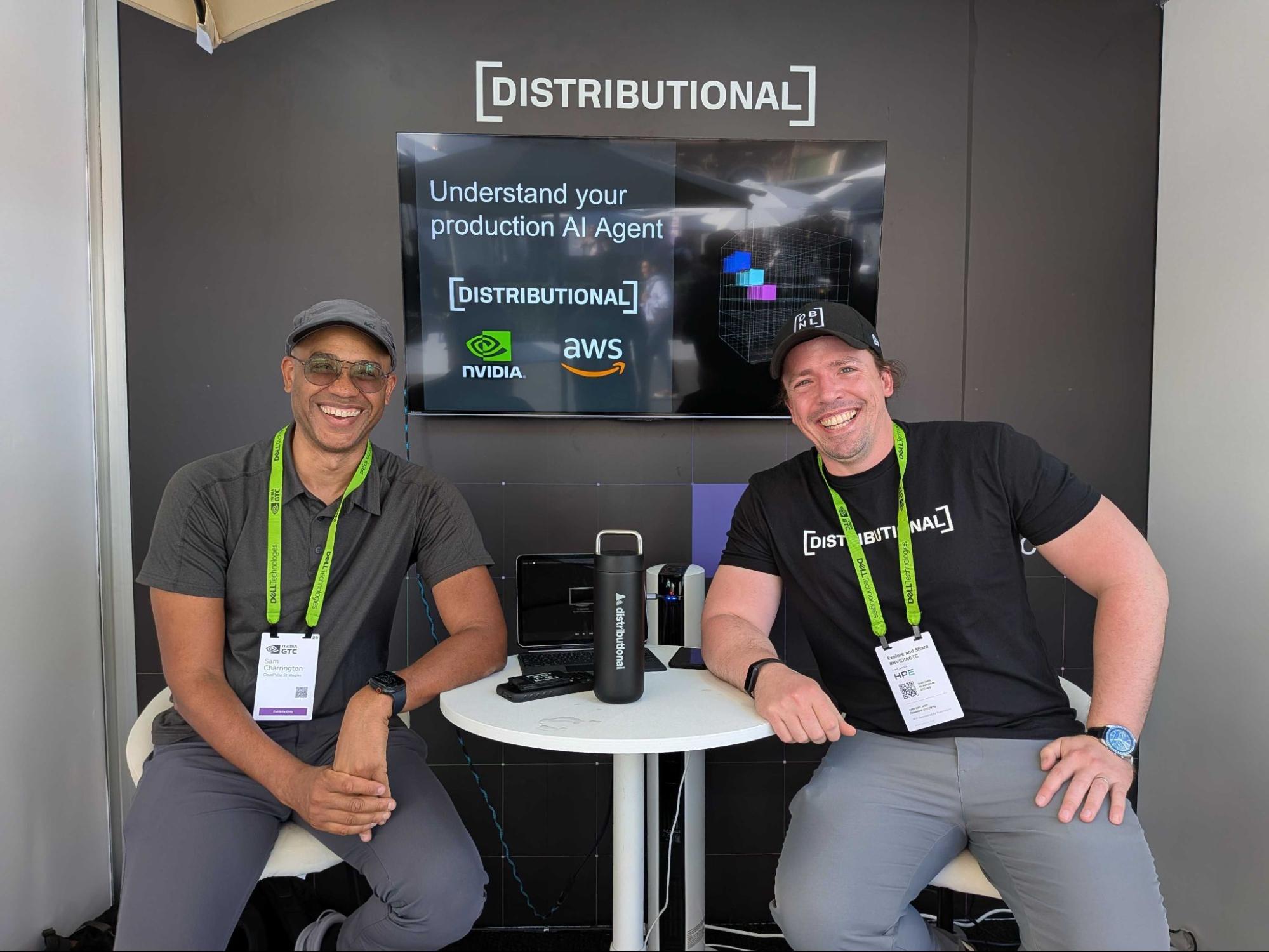
It’s beginning to feel like hype is finally meeting reality. A wide range of companies of all sizes from most industries stopped by the booth, and all of them have agents in production – hence their interest in learning more about our product. Of note, we spent time talking with a mid-sized hospital about their agent deployment, as well as the New York Public Schools. Sam Charrington of This Week in Machine Learning and AI also stopped by to talk with Distributional CEO Scott Clark on the implications for the production AI stack.
Merging agent analytics with agent governance
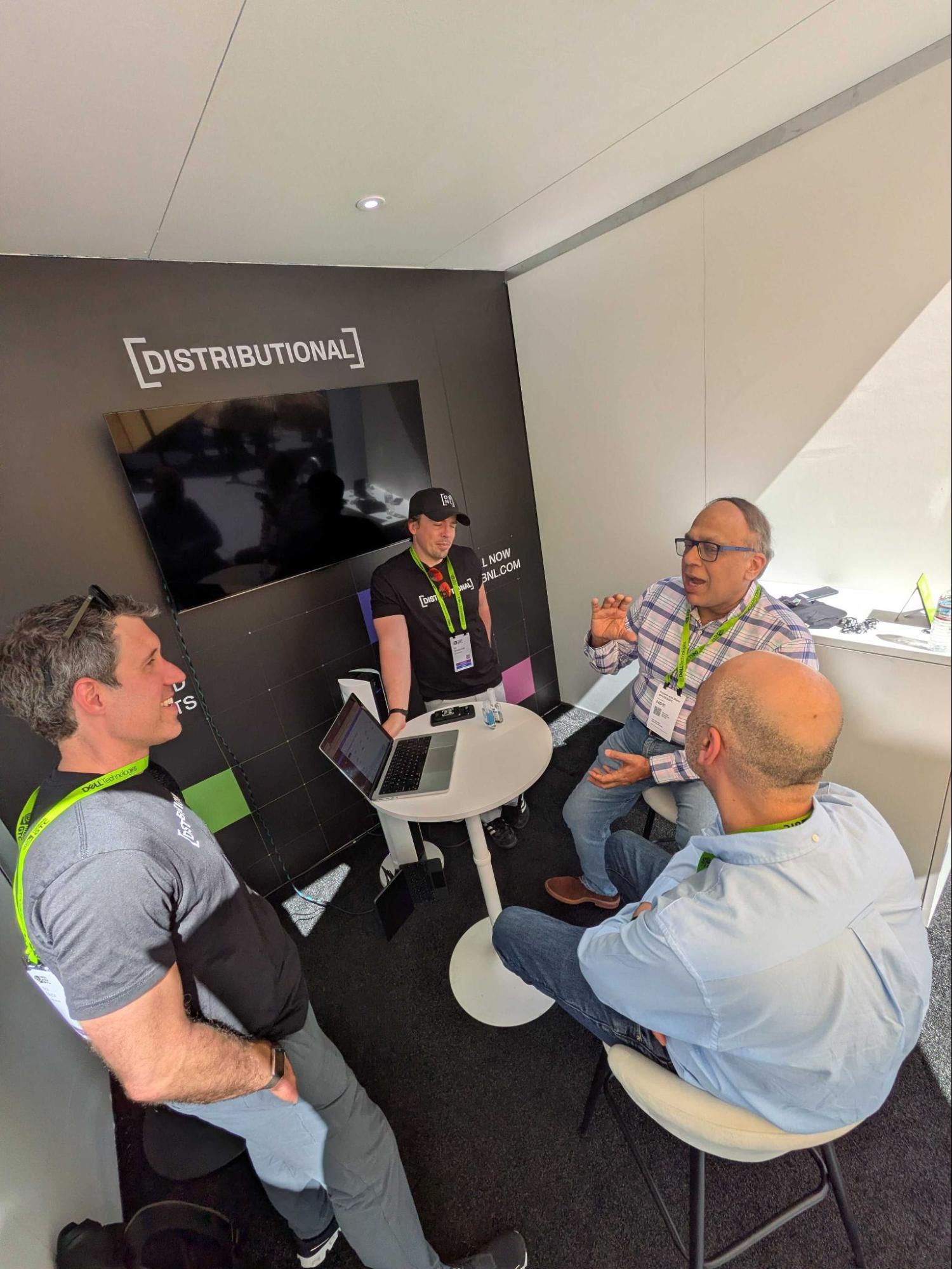
Peeyush Aggarwal and Sulabh Soral from Deloitte stopped by for an energizing discussion on how agents were transforming the governance needs of major banks and other regulated industries. Their innovative viewpoint is that analytics around agent behavior are one of the primary drivers of relevant information for various constituencies in these complex organizations, and having more bespoke ways to design and compute relevant metrics is a starting point for more proactive governance of agents. Importantly, agents aren’t likely to reach true scale within these organizations without this type of active governance in place.
Securely scale your claws
Even GTC couldn’t escape claw mania. Nvidia announced NemoClaw to enable secure, single command deployment of AI assistants, and Kari Briski donned her claws on stage as she made the announcement at GTC. As agents become more ubiquitous, bespoke, and powerful at the same time, understanding how they behave will become increasingly important.

How agentic benchmarks fit with analytics
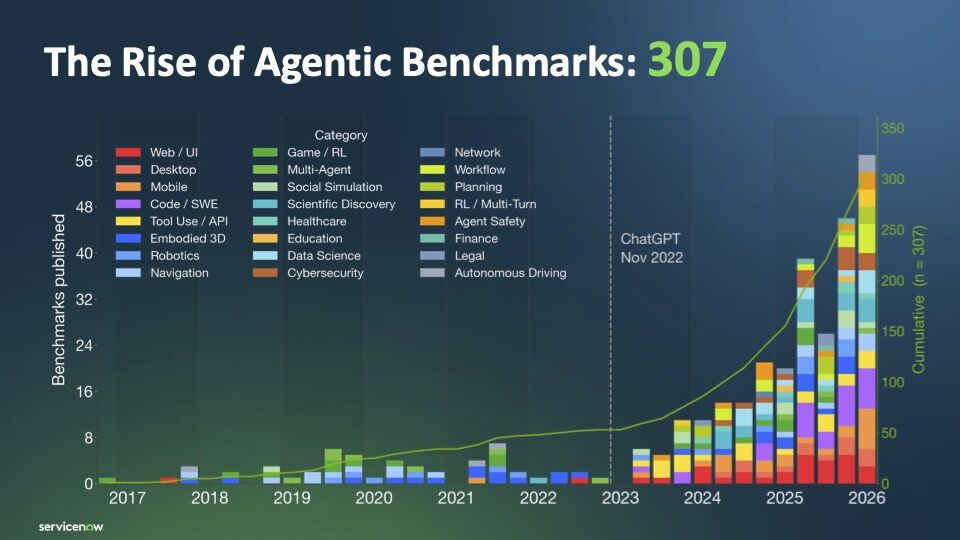
I met Alexandre Lacoste from ServiceNow, who was giving a talk on CUBE – Common Unified Benchmark Environments. CUBE is an open standard supported by the AI Alliance that makes it easy to wrap a benchmark once and run it anywhere. Alexandre and I had a good discussion talking about how Distributional could complement CUBE by making it easier to marry offline benchmarks with online analysis of agent performance, providing a more complete picture of expected versus actual agent behavior.
Robots continue to produce really fun demos
I’m not an expert on the robot space, so I will leave serious commentary to someone else. That said, the demonstrations were really fun to see in the GTC expo. And the roaming Boston Dynamics dogs and cart robots made for continuous entertainment throughout the expo area.
Programmatic tool execution
Jensen Huang moderated an Open Models Panel with founders from Langchain, Cursor, Perplexity, and Thinking Machines Lab. One of the themes related to how coding agents were making it easier to programmatically access tools in an agent workflow. Similarly, this group discussed how this approach was promising to simplify tool setup, selection, and execution to make these workflows more powerful. This trend relates to the rise of agents, making it easier for more people to truly access productive agent workflows.
Get started
Distributional’s full service is open and free to use. Try it today to transform agent traces into insights. We are also always happy to learn more about your use case and enterprise needs, so reach out to us at nick-dbnl@distributional.com with any questions.
Subscribe to DBNL
Thank you for your submission!
Oops! Something went wrong while submitting the form.